Cardiovascular Disease in the Fire Service
Posted: July 13, 2026
- 1 min read
- Find similar articles:
- Health and Safety
Cardiovascular Disease in the Fire Service: Why It Demands Our Attention PDF
Firefighters serve on the front lines of emergencies, responding to fires, medical incidents, hazardous materials, natural disasters and more. Their work is physically demanding, mentally taxing and often performed under extreme conditions. While these professionals are known for their resilience and dedication, the unique hazards of the job place them at increased risk for a range of health issues — none more deadly than cardiovascular disease (CVD).
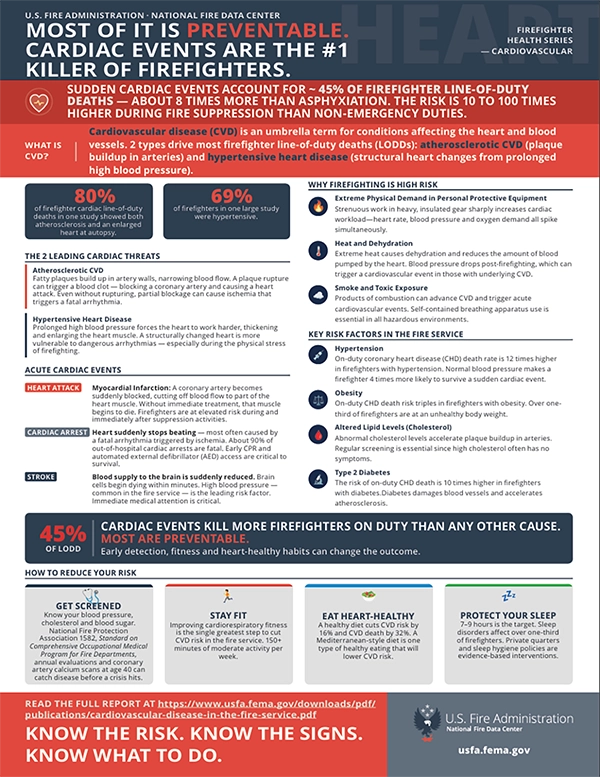
Sudden cardiac events, including heart attacks and cardiac arrest, remain the leading cause of firefighter line-of-duty deaths, accounting for nearly 45% of fatalities in recent years. The risk is compounded by chronic operational stress, irregular shift work, sleep disruption and the cumulative impact of traumatic events — all common experiences not only for firefighters but for other responders such as law enforcement, dispatchers and EMS personnel.
The U.S. Fire Administration has prioritized firefighter health with comprehensive reports on CVD, mental health and heat stress. This focus on CVD is driven by both the high rates of cardiac-related deaths in the fire service and the growing body of research that helps us better understand — and address — these risks.
Cardiovascular Disease in the Fire Service seeks to clarify the problem and offer possibilities for prevention, detection and management. The report will:
- Provide an overview of CVD to break down the complex nature of the disease and its risk factors.
- Explore the burden of CVD and CVD risk factors among firefighters.
- Summarize the cardiovascular strain of firefighting.
- Present strategies to reduce CVD and the risk of sudden cardiac events in the fire service.
While CVD affects nearly half of all American adults, the stakes are especially high for firefighters. Protecting their heart health is not just about preventing tragedy; it’s about ensuring they can perform their critical duties safely and effectively, from the first day on the job through retirement. By prioritizing prevention, early detection and proper management of cardiovascular risks, we can help safeguard those who dedicate their lives to protecting our communities.