Behavioral Health Issues in the Fire Service
Posted: July 22, 2026
- 1 min read
- Find similar articles:
- Health and Safety
Behavioral Health Issues in the Fire Service: Addressing a Critical Challenge PDF
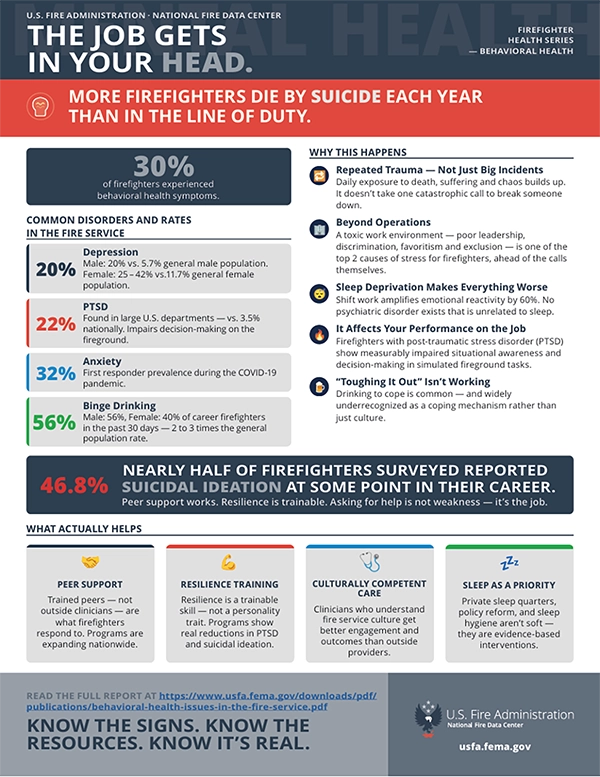
Firefighters routinely face intense and hazardous situations, from medical emergencies and traffic accidents to natural disasters and fires. The demands of the job — chronic stress, shift work, sleep disruption, traumatic events and organizational pressures — take a toll on their health and well-being. These challenges are not unique to firefighters; law enforcement, dispatchers and emergency medical services personnel share similar risks, leading to overlapping concerns like cardiovascular disease, sleep disorders, mental health issues and chronic illness.
This report focuses on behavioral health in the fire service, exploring how job exposures impact mental wellness, the burden of behavioral health concerns, and strategies to build resilience and support well-being throughout a firefighter’s career.
Behavioral health encompasses not only mental health, but also daily habits and behaviors — such as substance use and stress management — that influence overall wellness. Historically, behavioral health (particularly mental health) was stigmatized in the fire service, but today peer support and integrated behavioral health conversations are becoming more the norm. Despite progress, suicide remains a pressing issue, with research indicating that fire departments are more likely to experience a suicide than a line-of-duty death. As such, efforts must focus on further changing firefighter culture and reducing the stigma of mental health and other behavioral health issues. Promoting healthy practices such as getting good quality sleep must also be a priority.
The U.S. Fire Administration is committed to leading the fire service in the prevention, early detection and proper management of behavioral health conditions, aiming to protect firefighters from recruitment through retirement. By prioritizing behavioral health alongside physical health, the fire service not only protects its members but also ensures the safety and strength of the communities they serve.