
For most students, the last fire safety training they received was in grade school, but with new independence comes new responsibilities. It is important that both off-campus and on-campus students know their fire risks and prevention actions that could save their lives.
There are several specific causes for fires in on- and off-campus college housing, including cooking, candles, smoking and overloaded power strips.
Did you know:
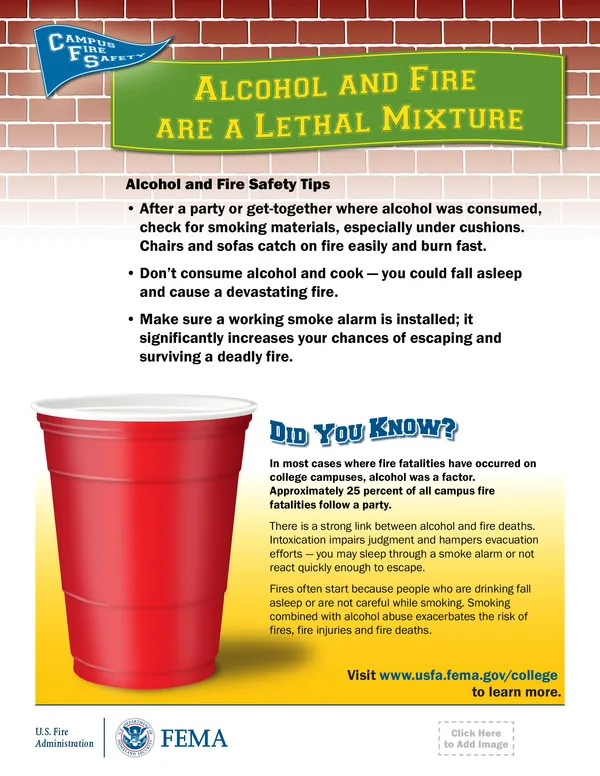
Approximately 25% of all campus fire fatalities follow a party.
Keep college students safe from on-
and off-campus housing fires. Explore these materials to learn more about discussing fire safety
with students, their parents, and campus housing administrators and staff.
Messages to share with students
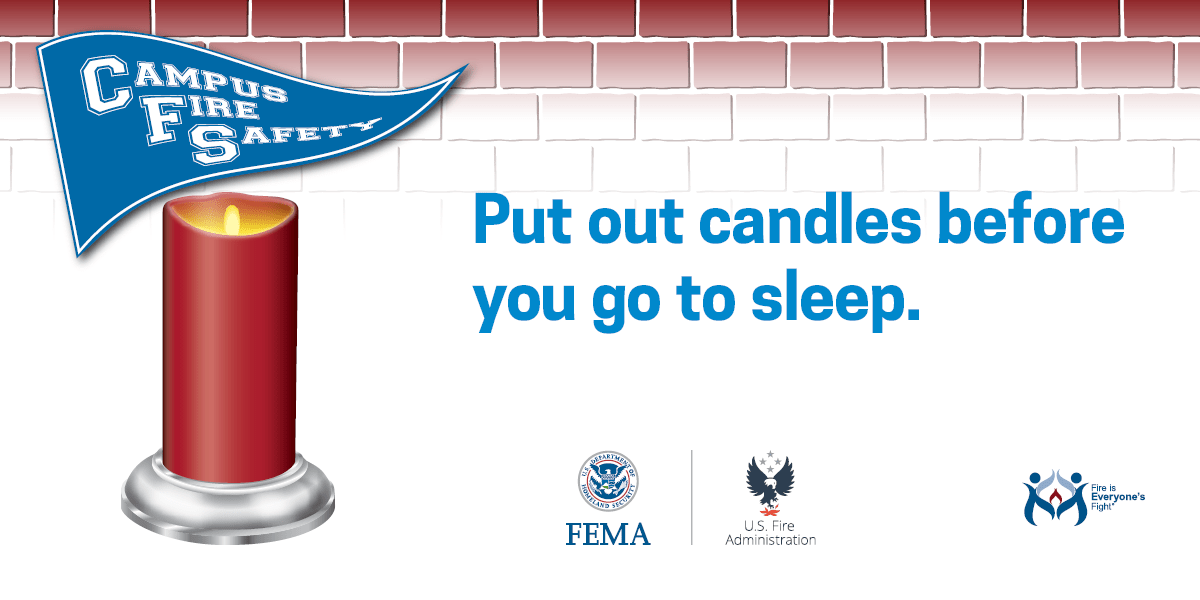
Candles
Place candles in sturdy holders.
Never leave a burning candle unattended.
Keep candles away from anything that can
burn.
Use safe flameless candles.
Cooking
Cook only where it is allowed.
Keep your cooking area clean and free of anything
that can burn.
Keep an eye on what you are cooking, especially if
you are cooking at high temperatures.
If a fire starts in a microwave, keep the door
closed and unplug the unit.
Electrical safety
Keep lamps, light fixtures and lightbulbs away
from anything that can burn.
Never use an extension cord with large appliances
like a refrigerator.
Don't overload outlets.
Use only surge protectors or power strips that
have internal overload protection.
Smoking
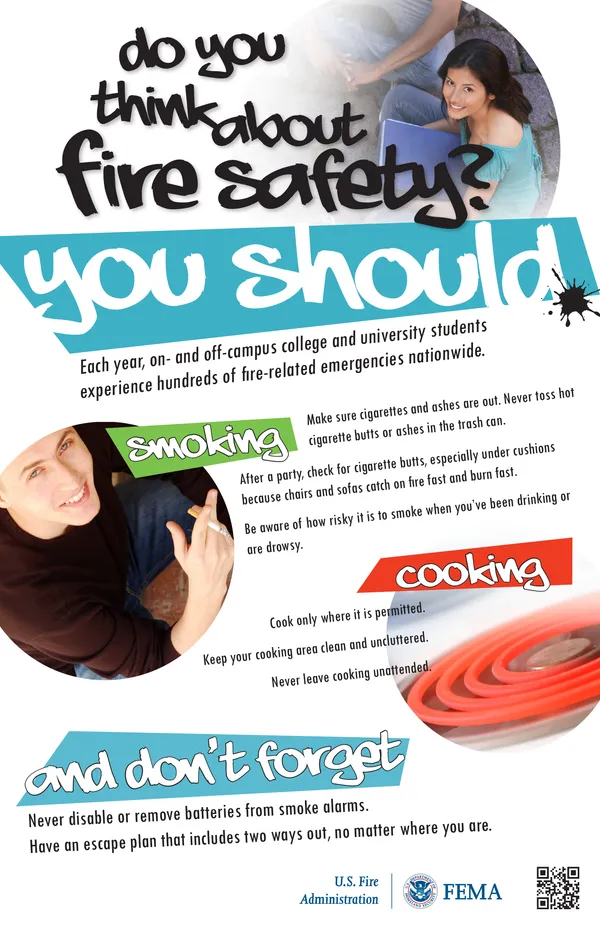
Make sure cigarettes and ashes are out. Never toss
hot cigarette butts or ashes in the trash can.
Use deep, wide ashtrays. Place ashtrays on
something sturdy and hard to burn.
After a party, check for cigarette butts,
especially under cushions. Chairs and sofas catch on fire fast and burn fast.
Don’t smoke when you have been drinking or
are drowsy.
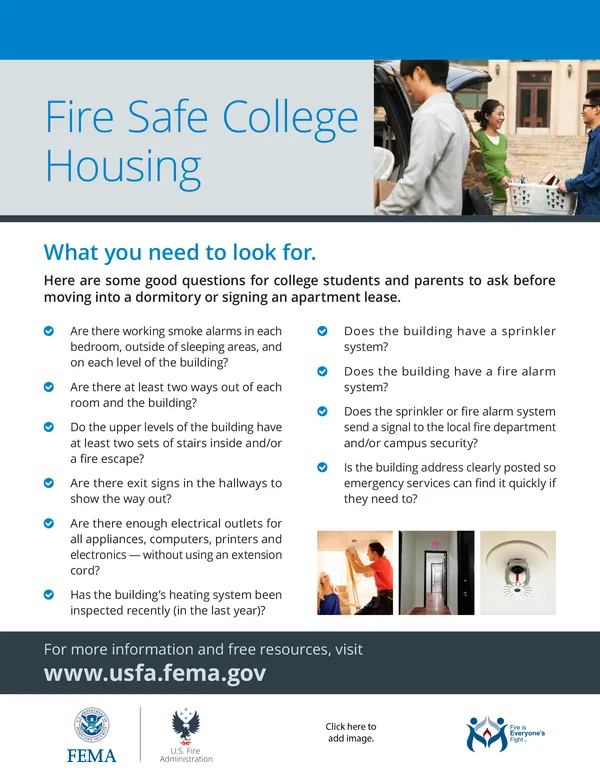
Messages to share with colleges and universities
Provide students with a program for fire safety
and prevention.
Teach students how to properly notify the fire
department using the 911 system.
Install smoke alarms and an automatic fire
sprinkler system in every dormitory room and every level of housing facilities.
Maintain and regularly test smoke alarms and fire
alarm systems. Replace smoke alarm batteries every semester.
Regularly inspect rooms and buildings for fire
hazards. Ask your local fire department for assistance.
Inspect exit doors and windows and make sure they
are working properly.
Create and update detailed floor plans of
buildings, and make them available to emergency personnel, resident advisors and
students.
Conduct fire drills and practice escape routes and
evacuation plans. Urge students to take each alarm seriously.
Social media graphics and stock photos
Handouts
Videos
https://youtu.be/yMQQhMztyuw
https://youtu.be/6XF21V5YpZk